Echoes of Enigma: Navigating the Secrets of Spiritcaller Cave in Elden Ring
Jun 16, 2026
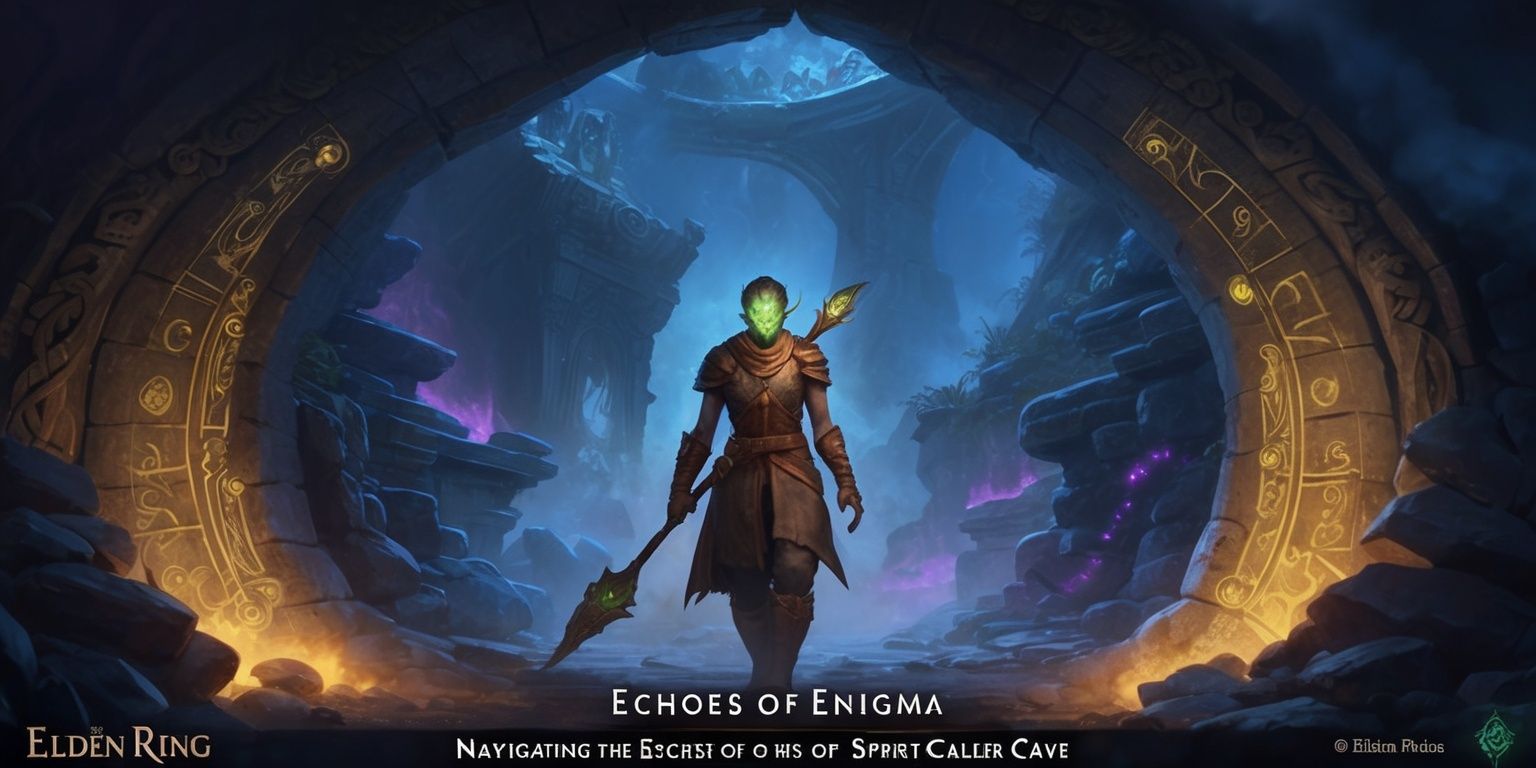
The winding path through the mysterious mountain terrain of Elden Ring leads brave adventurers to a realm full of secrets and daunting challenges. Nestled at the core of this epic journey is the cavern known to many as Spiritcaller Cave, a location nestled on the expansive Mountaintops of the Giants. Rich with strange creatures, ancient relics, and treacherous passages, the cave offers a complex network of encounters that test both combat skills and problem-solving acumen. As players traverse its depths, they face not only physical obstacles in the form of menacing fauna but also intricate puzzles and the remnants of a long-forgotten past. The experience is both a test of mettle and a celebration of the game’s meticulous design, compelling explorers to uncover what lies hidden beyond each darkened corridor.
The Prerequisites and Route to Entry
Before even stepping into the chilly maw of the Spiritcaller Cave, players must secure essential items that serve as keys to its many secrets. Located to the northeast of the imposing Guardians' Garrison, the cave demands that travelers gather two rare Stonesword Keys to gain entry. The journey begins at the Site of Grace labeled for Spiritcaller Cave, from where one must leave in a south-southeast direction until a substantial hole in the rock appears. This initial phase of the adventure is as much about navigation as it is about discovery. Familiarity with the game’s vast world map becomes crucial as intricate details and landmarks assist in ensuring that adventurers do not stray off course. Every step taken encourages careful observation of the environment, which is filled with visual cues and hidden lore waiting to be unlocked.
First Challenges: The Southern Tunnel and Its Inhabitants
Upon successfully entering the hidden passage, the journey immediately reveals its first set of challenges nestled within a long, winding southern tunnel. Deep within these shadowy confines, players encounter a spiritcaller snail—a creature notorious from earlier encounters in the catacombs. This particular adversary has the uncanny ability to summon spectral wolves continually, effectively creating a scenario where one must manage multiple threats simultaneously. The atmosphere in this section is charged with tension, as the persistent presence of summoned entities forces constant vigilance. Every maneuver must be precise and calculated, as the accumulative effect of these encounters gradually builds a sense of urgency. This stage in the cave acts not only as a combat tutorial but also as an immersive reinforcement of the game's broader combat mechanics and enemy behavior.
Delving Deeper: Navigating Forked Tunnels and Hidden Chambers
Advancing further into the labyrinthine cave complex, explorers come upon a point where paths split into distinct branches, each harboring its own set of challenges and rewards. One branch leads to a somber dead end where remnants of a bygone struggle are evident in the form of scattered corpses. This area rewards the attentive with treasures such as a Golden Rune, a Rune Arc, and a Hero's Rune, each signifying ancient power and forgotten history. Meanwhile, another passage, heading west, reveals a room overlooked by strategically placed snails lurking in the shadows—one discreetly positioned to the left and another guarding the lower recesses. An unexpected encounter with an enigmatic samurai figure, known as Inaba, Disciple of Okina, further complicates navigation in this sector. Selecting the optimal route here demands a blend of caution, observation, and tactical acumen, reflective of the multifaceted approach required throughout Elden Ring.
The Lure of Treasures Hidden in the Depths

As adventurers continue their descent into the Spiritcaller Cave, the rewards begin to pace the peril. After systematically overcoming initial foes and narrowly avoiding environmental hazards, the winding corridors yield tangible treasures. In secluded pockets of the cave, players have the opportunity to acquire items such as the Arteria Leaf, which further accentuates the game’s intricate resource management system. Amidst these discoveries, a dead end also offers a mix of relics including additional Golden Runes and smaller mystical artifacts that hint at the lore embedded deeply in the game’s history. This segment of the exploration emphasizes the rewarding nature of thorough investigation. Every shadowed corner and seemingly insignificant obstacle may harbor items of great worth, rewarding persistence and careful exploration while further enriching the narrative tapestry of the game world.
Rich Atmosphere: Design and Aesthetic Experience
The Spiritcaller Cave is not just a hub for combat; it is a carefully crafted environment that embodies the distinct atmospheric charm of Elden Ring. Rich textures, dim lighting, and the interplay of natural and supernatural elements create a dramatic setting that captivates players. The cavern’s walls, adorned with intricate rock formations and subtle hints of ancient artistry, speak to a time when monumental events were etched into the very fabric of the landscape. The ambient sounds—the distant echoes, the soft clatter of shifting stones, and the haunting calls of unseen creatures—combine to craft an immersive narrative in their own right. As explorers traverse this eerie background, they gradually gain an appreciation for the meticulous detail that has gone into blending interactive gameplay with a narrative-rich setting, turning each step into a visceral experience that transcends mere game mechanics.
Complex Encounters with Unexpected Adversaries
the intricate network of winding passageways and concealed rooms of the cave invariably introduce encounters that require swift tactical adjustments. Beyond the earlier skirmishes with summoning creatures, players also cross paths with more formidable foe groupings. Among these are additional groups of spectral wolves roaming in packs, paired with other lesser entities that test the player’s adaptability. While some of these opponents echo earlier encounters, their positioning in narrow, claustrophobic tunnels forces players to adapt their combat strategies to the confined spaces. The juxtaposition of aggressive mobs and strategically placed wanderers averts predictability, ensuring that every step feels laden with risk and reward. In this dynamic environment, successive encounters serve as both practice and trial, deeply integrating controlled combat nuances with the broader challenge of navigating an ever-shifting labyrinth.
Preparing for the Pinnacle Challenge: The Boss Battle Setup
Deep within the cave’s most secluded section, the environment transitions into a prelude of what might be the ultimate test. Approaching the fog-enveloped passage, the intensity of the journey escalates, prompting players to prepare for an encounter that has been foreshadowed by previous trials. As the passage narrows and the ambient darkness becomes nearly palpable, the stage is set for what lies ahead—a boss battle that unfurls in multiple, layered stages. Here, every precaution is necessary; players must recalibrate their strategies, conserve their resources, and fine-tune their positioning. This critical juncture exemplifies the game’s layered approach to challenge and progression, where a single battle not only summarizes the strengths and weaknesses amassed during the run but also commands a blend of offensive precision and defensive maneuvering to overcome the looming threat.
Unraveling the Multi-Stage Boss Encounter
At the culmination of the winding passages, adventurers face the pivotal moment in Spiritcaller Cave—a confrontation set in three distinct phases that progressively amplify in challenge. The initial phase introduces a version of a ghostly figure, a manifestation of the Godskin Apostle, which appears in ethereal form. Already familiar from tougher encounters elsewhere, this enemy pushes players to engage with a blend of timed strikes and defensive tactics. Following its defeat, the scenario shifts abruptly as a Godskin Noble emerges, reminiscent of encounters at the Temple of Eiglay in Volcano Manor. This foe retains its characteristic combat behavior, compelling players to adapt swiftly. The concluding phase transitions into a final face-off with a lesser but agile entity—a spiritcaller snail that previously roamed the corridors. Each stage demands a precise modulation of tactics, encouraging players to refine their approach with each successive round.
Adaptive Combat: Strategies and Tactical Maneuvers
The intricate dance of battle within Spiritcaller Cave is emblematic of Elden Ring’s broader emphasis on adaptive combat. Throughout the multi-stage boss fight, each enemy introduces a unique set of attack patterns and vulnerabilities that compel players to modify their tactics dynamically. For instance, the ghostly form of the initial adversary demands a focus on ranged assaults and rapid movements, while subsequent encounters with more physically imposing foes require close-quarters engagement paired with strategic retreats. This constant transition forces a reevaluation of one’s playstyle, ensuring that no single approach remains effective throughout the entire battle. With each phase, the interplay between offense and defense is finely balanced, creating a combat An experience that stimulates both the mind and body in equal measure demanding. In this environment, success is predicated on fluid strategy, adaptability, and a keen understanding of enemy rhythms.
Environmental Nuances and Design Integration
The design of Spiritcaller Cave is a masterclass in environmental storytelling, seamlessly integrating combat challenges with the subtle conveyance of lore and atmosphere. Every scene within the cave is meticulously arranged to evoke a sense of ancient enigma, from the weathered rock faces to the ethereal glow that occasionally illuminates intricate carvings. These details create a living environment where every element has its purpose. The strategically placed corridors and unyielding rock structures not only delineate the arena for physical confrontations but also act as visual cues to the rich backstory of the realm. As players traverse these spaces, the spatial layout itself becomes a silent narrator of past events and legends, guiding their journey with a blend of practical design and aesthetic depth that enriches both the gameplay and narrative experiences.
Rewards and Relics: The Bounty of the Depths
For those who emerge triumphant from the intricacies of Spiritcaller Cave, the rewards are as multifaceted as the challenges encountered within its depths. In addition to the experience of battling through shifting scenarios and multifarious foes, successful adventurers receive an abundance of valuable items that enhance further progression in their journey. Items such as numerous Runes, the Godskin Swaddling Cloth, and the coveted 'Ritual of the Black Flame' are scattered throughout the area, each symbolizing a fundamental aspect of the mystical heritage of Elden Ring. These relics serve Serving not merely as emblems of triumph, but also as symbols of further achievement as functional enhancements in future encounters. The allocation of rewards reflects the game’s delicate balance between risk and reward, urging players to explore every niche and corner to uncover the abundant treasures hidden within this enigmatic cave.